Based in Wichita, KS
Ethan
Reyes
Data Engineer & Software Developer bridging heavy-industry data with modern cloud-native applications.

About Me
Engineer. Interviewer.
Constant learner.
I'm pursuing an AAS in Cloud Computing at Wichita State University (2027) with plans for a BS/Masters in Engineering Management at Wichita State (2029). My experience spans data entry and programming at Textron Aviation through Ennovar, and a growing portfolio of cloud and software projects.
Outside of building things, I run an interview series with industry leaders and engineers — capturing insights that don't show up in textbooks.
Experience & Projects
Where I've worked
& what I've built.
Data & Compliance Contractor
Focused on data entry, compliance documentation, and warehouse problem-solving at one of the world's leading aircraft manufacturers. Currently transitioning these workflows into automated data engineering pipelines.
AReS 3 Diagnostic Information Webpage
Designed and deployed an internal web application hosted directly on the AReS 3 — a hardware diagnostic box used in Textron Aviation aircraft. The site serves as a guided reference for technicians, covering system usage, live sensor data, and terminal-based operation procedures.
Built by SSH-ing directly into the embedded hardware via Windows PowerShell — no external install required. All source code is version-controlled and backed up locally for security.
Internal · PrivateAAS · Cloud Computing & Application Development
Coursework spanning Java, Python, C#, JavaScript, HTML/CSS, AWS, and Test-Driven Development. Hands-on experience with Power BI for data visualization, Windows PowerShell for automation, and cloud infrastructure on AWS.
View Projects on GitHub →Web-Reyes Portfolio
This site — built from scratch in HTML, CSS, and JavaScript. Features a terminal boot animation, serverless Netlify Functions for visitor tracking and resume download logging, and a full Jest + JSDOM TDD test suite covering navigation, DOM structure, and XSS security.
View on GitHub →Whisper Transcription Pipeline
Built a local Python transcription pipeline using OpenAI Whisper and ffmpeg to process multi-file M4A interview recordings into structured text transcripts. Powers the interview series content on this site.
View on GitHub →3D Visitor Globe
An interactive 3D globe that visualizes real-time visitor locations pulled from the Netlify serverless backend. Visitor coordinates are plotted as glowing amber pins on a rotating globe and embedded directly in this portfolio.
COMPLETEDCloud Architecture & Deployment
Built serverless.
Deployed globally.
"Efficiency in infrastructure allows for excellence in engineering."
CI/CD Pipeline
Integrated with GitHub to automate the build and deployment
pipeline. Every update is verified and deployed instantly on
every git push — zero manual steps.
Serverless Edge Distribution
Hosted via Netlify's serverless model for 99.9% availability and global edge performance with zero infrastructure overhead.
Serverless Functions
Two live Netlify Functions handle backend logic — a visitor counter with geolocation capture and a resume download tracker — without a single server to manage.
Operational Excellence
By abstracting server management entirely, 100% of development bandwidth is focused on high-value engineering output and data integrity.
Live Visitor Globe
U.S. Aviation Data · FAA Registry
Interview Series
Conversations with
industry leaders.
An ongoing series of in-depth interviews with engineers, founders, and builders. Click any card to read the full conversation.
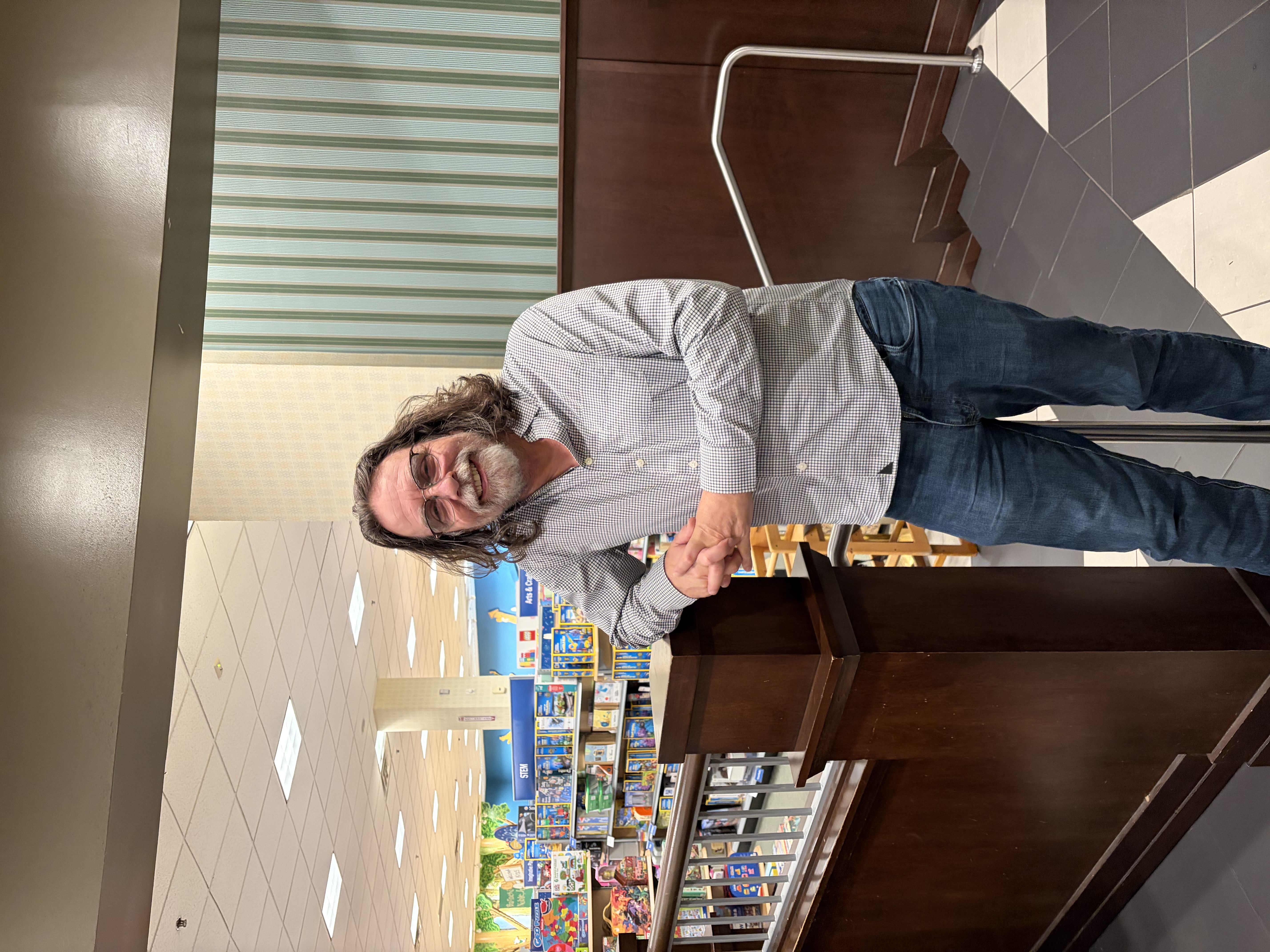
Episode 01
Bill Scott
Founder & CEO — BrainPaint Inc.
Bill Scott is a pioneer at the intersection of neuroscience and software engineering. Fascinated by both computers and the human mind since age five, he built his first four-bit computer at eleven alongside mentor Alan Johnson. After working with Native American communities in Minnesota in the early 1990s, Bill witnessed neurofeedback produce results that conventional treatment couldn't match. That discovery led to founding BrainPaint in 2007 — a lease-based neurofeedback platform now used by mental health institutions worldwide. BrainPaint has assisted five Olympic athletes earning one gold, two silver, and two bronze medals, and serves over 10,000 clients per month.
Key Quotes
"The most valuable skill I have — even now with all the advances in AI — is knowing clearly what computers are currently really good at, and what they're terrible at, as it relates to the human experience."On Technical Wisdom
"The more I automate things, the higher the threshold is that everything works perfectly. The dark underbelly of AI is a constant feedback loop — and everything is my fault. That's the position UI developers have to own."On Automation & Accountability
"If you can't engineer prompts really well, you won't have any place as a junior programmer. Interviews are increasingly going to be: here's a project, solve this, text me when you're done. Good prompt engineers will text back fast."On the Future of Hiring
"Find the thing you would do for free and hone that craft. You don't have to choose between passion and income — those are narratives. You can do both."On Career Advice
"Everything, everything, everything is trust. You can't manufacture trust. You build it with people — painstakingly, over years — and the machine has to earn it the same way."On Building Products
"When your purpose is larger than you, what you say means nothing — what matters is the spirit you're possessed with. CPR: Context, Purpose, Results. Lead from the bigger picture and you can actually pick your results."On Leadership · CPR Framework
Key Insights
AI Before It Was Cool
BrainPaint has leveraged AI since 2005 — starting with IBM Watson Analytics and automated macros that gave the software literal control of the mouse. While most companies only began exploring AI in the last decade, Bill was already running a 300-step clinical procedure fully automated, reducing clinician training from seven eight-hour days to near-zero human intervention.
Metadata-Driven Quality Assurance
BrainPaint collects de-identified metadata from every session run on the planet. This allows Bill to detect when clinicians miss critical steps — not through surveillance, but through statistical patterns — and automatically trigger retraining, QR-code guides, or equipment lockouts to protect result integrity across all providers.
The "Garbage In, Garbage Out" Problem in Healthcare Tech
Bill described the challenge of building software that understands human context — like an anxious teenager whose session data is unreliable. His solution: statistical inference models that flag over-reporters and under-reporters with high accuracy, protecting clinical outcome integrity without burdening the clinician.
10 People Doing the Work of 200
Through end-to-end automation — from contract signing and CRM population to equipment shipping and tech support — BrainPaint operates with roughly 10 people handling what would otherwise require hundreds. Every workflow that could be automated was automated from day one, and the AI even self-heals software errors before users notice them.
Prompt Engineering Is the New Literacy
Bill's advice for junior developers: master prompt engineering above all else. He personally maintains reusable core prompts that keep variables consistent, prevent AI from silently rewriting libraries, and return complete codebases ready to paste back — a disciplined system built through years of real-world iteration.
Always Say Yes
Bill's philosophy for engineers: in the digital world, everything is possible. The engineers who say "that's hard, not my problem" become anchors on their teams. The ones who say "yes — how do we solve this?" become irreplaceable. Even when a solution fails, you built a skill set. In the digital world, there is no losing.
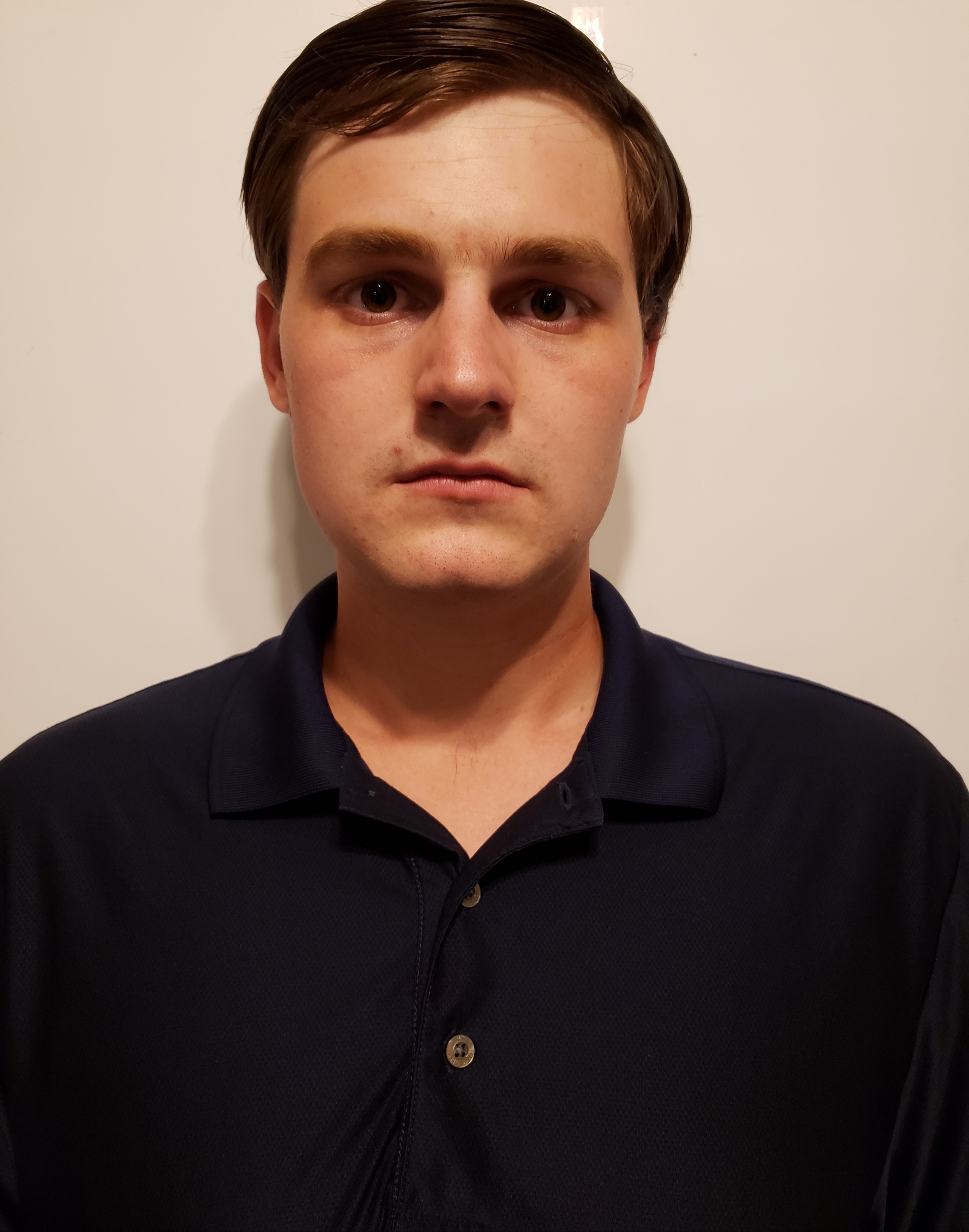
Episode 02
Haines Todd
Software Engineer — Textron Aviation
Haines Todd is a software engineer at Textron Aviation in Wichita, Kansas, where he has spent his career building safety-critical avionics software. He joined Textron as an intern in 2017, where he began work on AReS 3 — an aircraft diagnostic system he would go on to lead. His work spans low-level FPGA firmware, embedded C, and Python, all governed by the rigorous DO-178C aviation software standard. He started writing code on microcontrollers in eighth grade and never stopped.
Key Quotes
"You can study requirements and get yourself into paralysis analysis — but really, you just need to start somewhere. Even if it's completely wrong, you've at least learned one way to not do it."On Getting Started
"Learning how to use encapsulation is very important. Be able to draw boxes around things — take the inputs and the outputs and hide the complexity inside the box."On Engineering Fundamentals
"Sometimes you make that first version of the software that's kind of working — that was your learning experience. Sometimes you have to be willing to throw that away and start over to make a cleaner final version."On Iteration
"Go check the simple things first. Even on a purely software project — a lot of times my issue would come down to something really stupid, like a 6-volt battery running low."On Debugging
"Try to be consistent with your coding style so that you can look at any block of code you wrote five years ago and still remember your methodology for writing it."On Code Quality
"Know who's driving your requirements — know who you're making the product for — so that you can make the right product."On Requirements
Key Insights
Encapsulation is the universal engineering skill
Whether it's an FPGA, a microcontroller, a Python module, or a software library — the ability to draw a box around something and reduce it to just its inputs and outputs applies everywhere. It's not about any specific language; it's the mental model that transfers across all of engineering.
Build the first version to throw it away
The first working version of software is often a learning exercise disguised as a product. Haines's advice: be willing to discard it entirely once you understand the problem. The second version, built with that knowledge, is your real software.
Start before you're ready — but not without requirements
Two pieces of advice that seem to contradict each other but don't: start somewhere even if it's wrong, and know your requirements before you build. The key is knowing when analysis is productive and when it becomes paralysis.
FPGA timing is one of the hardest problems in hardware
Unlike sequential software, FPGAs define hardware — gates, registers, and clock signals. Data race conditions cause subtle bit corruption that can be nearly invisible. Getting timing right on AReS 3's low-level data interface was the hardest challenge of the project.
Avoid global variables like the plague
One of the most consistent pitfalls for developers at every level. Global state makes code harder to reason about, test, and maintain. Haines's rule: sometimes you can't avoid it entirely, but treat every global variable as a red flag that needs justification.
Learn to compile without an IDE
Understanding GCC, makefiles, header files, and static vs. dynamic linking at the command line gives you a mental model that no IDE can teach. Haines still reaches for Notepad++ and a terminal when experimenting — because it forces you to understand what's actually happening.
Episode 03
John Davis
Programmer & Systems Installer — National Guard
Contact
Let's connect.
I'm always open to conversations about engineering, cloud infrastructure, data pipelines, or opportunities to collaborate.